
Traditional knowledge holders on seals, sealing and marine ecosystems have been under severe threat for decades, but passing on traditional knowledge from generation to generation within a cultural community is not as simple as writing it down or recording it. Traditional knowledge is a living thing; it is learnt through doing, and evolves, grows and adapts amongst its holders in tandem to the physical, environmental, social, economic and cultural conditions in which it exists. Its preservation, and power to inform about the world around us, relies on its continuous use.
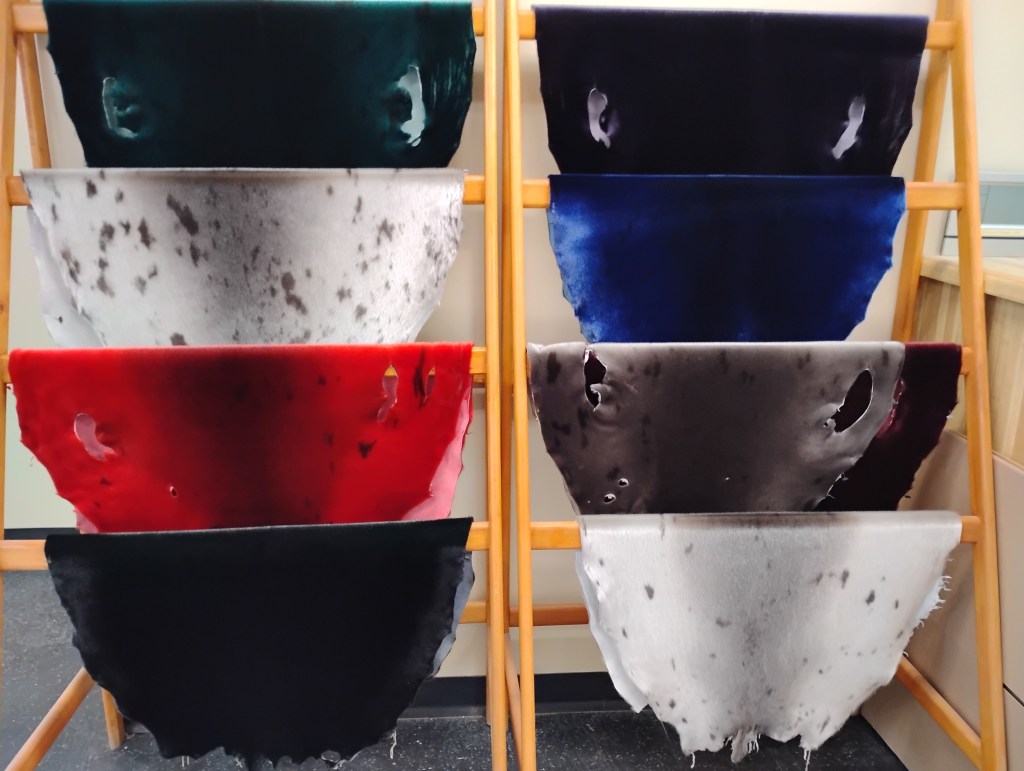
One industry and community leader working to acknowledge, protect, maintain, and use traditional sealing/fishing knowledge is Carino. Carino is a standard bearer for traditional sealing/fishing knowledge, and its holders, with its roots in generations of Norwegian and Canadian sealing traditions. Standing as the only seal processing company licenced to operate a tannery in Newfoundland and Labrador, Carino has its flagship facility in South Dildo on the Island of Newfoundland. It is one of only three companies involved in aspects of seal processing in the province, with one other involved in processing meat and the other presently inactive. While seal processing is at the heart of Carino’s work, and arguably the part of its operation that is most known, the company is much more than just a business.
Carino, and its staff, are a linchpin in traditional sealing/fishing knowledge. For Newfoundlanders and Labradorians in particular, if Carino is lost an irreplaceable connection between our heritage and survival as a culture with the generations of carefully honed expertise on seals, fish species, and our marine ecosystems and traditional and economic practices, starting with hunting preparation and ending with marketplace and community access to seal products, will be severed. It is a heavy burden on one small company to bear, but it is a mantel that its operators and employees appear to take in stride.
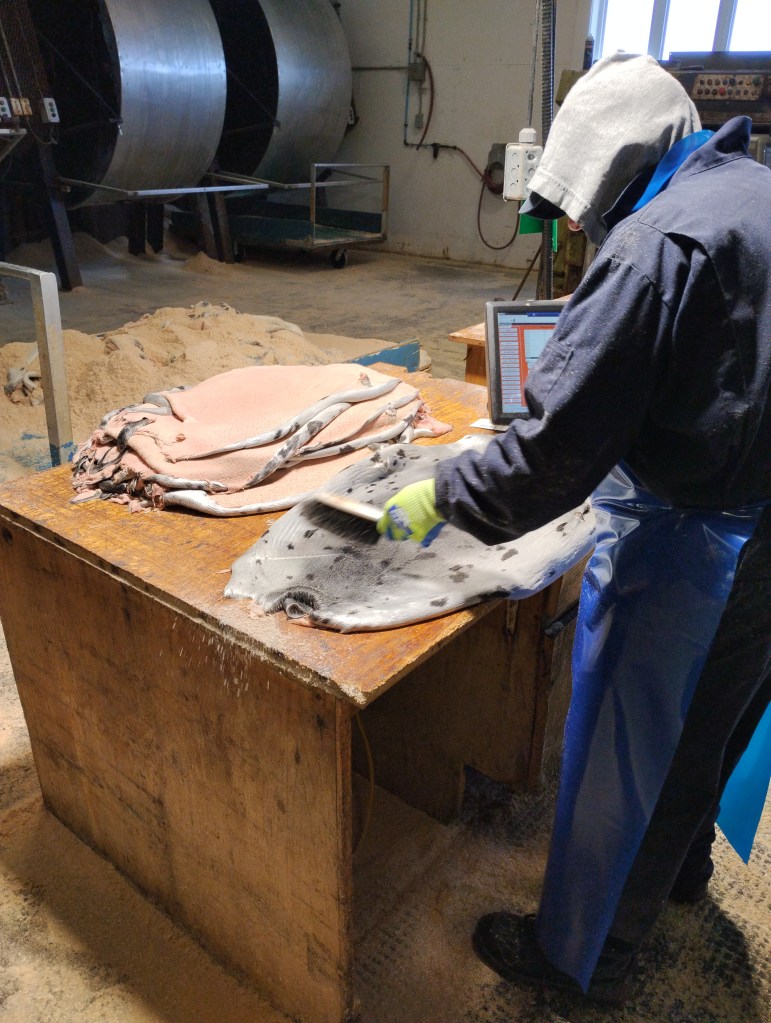
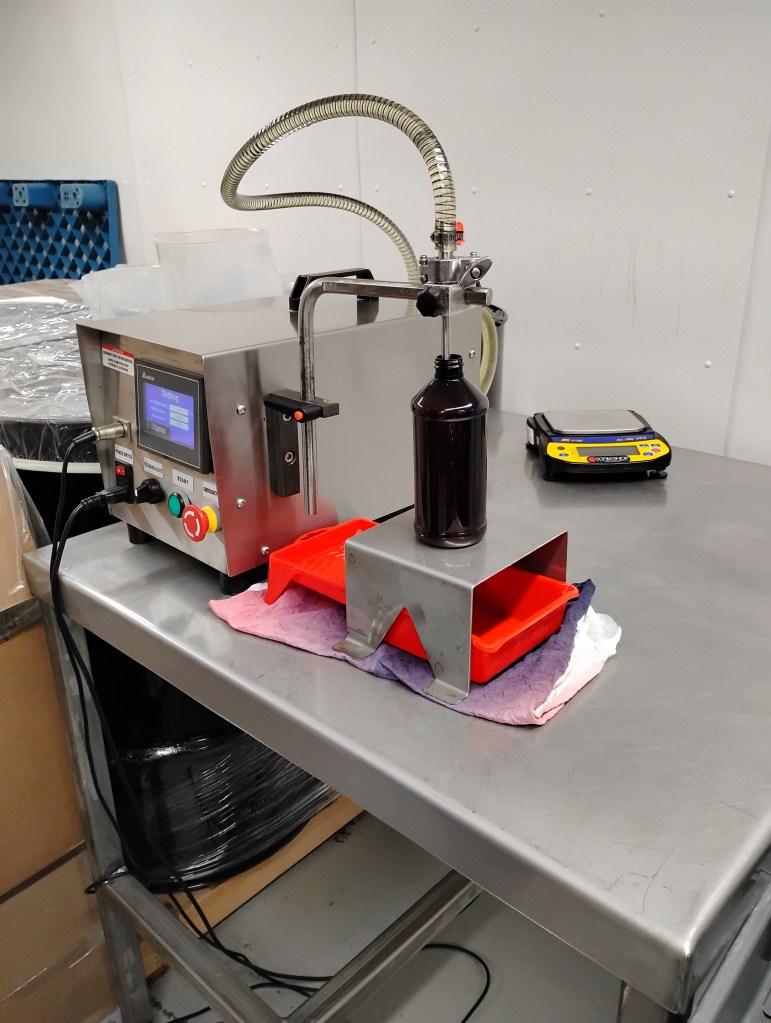
In April 2025, during the sealing season off the coast of Newfoundland and Labrador, Canada, I had the opportunity to visit the Carino facilities and speak with people on site. It is a small operation with only 48 people working at its seasonal height of production. I observed the melding of modern machinery with traditional methods such as the use of precise machines for separating pelts and blubber at the same time as the traditional use of sawdust continues as a simple but effective means of degreasing and preparing seal pelts. I watched as a state of the art machine provided accurate square footage of individual pelts for precise pricing but also the key step of using traditional coarse salt, water and old-fashion in-the-ground open vats to cure and store pelts, sometimes for years without issue. The facilities reflect a fascinating blend of modern tools and traditional techniques.
Carino states on its website that “[w]e have a deep appreciation for the ocean and our environment and are committed to protecting it for future generations”. The company’s stated commitment was something I could observe in practice when I was on the ground, and stems from its blended coastal Norwegian and Canadian fishing roots. I saw a company working to reflect the core underpinning and shared view found across long-established, embedded Indigenous and non-Indigenous sealing cultures in the Circumpolar North and the bordering Baltic Sea region, which is to aim for the full use of a harvested seal.
Nothing goes to waste. The traditional seal pelts and the range of health products using seal oil were items I expected to see. However, I learned too about the company’s work supporting and partnering with Indigenous and local businesses, exploring the feasibility of using seal by-products as an organic fertilizer in farming, and working with rightsholders and stakeholders on endangered marine species protection.
A respect for seals came across throughout my visit at Carino that belied anti-sealing tropes and European Union moralizing. For example, the company set the standard for the now mandatory training in safety and humane killing methods for all Canadian seal hunters; successfully advocating the Government of Canada to echo their commitment to precision, excellence and respect for the environment and animals as the only expectable standard in commercial seal harvesting. This standard of respect for seals and the coastal environment is embraced by local fishers/sealers as it aligns with social norms and expectations in local and Atlantic Canadian fishing/sealing communities which recognises and respects the harsh and dangerous conditions out on the ice and hold sanctity for seals upon which they rely.
As a researcher, my time at Carino was informative for my work, and I am grateful for the opportunity to visit their facilities. As a Newfoundlander, though one somewhat removed from the daily details of seal hunting and processing, my time at Carino resonates with me deeply.
Our top ocean experts – our fishers – have hunted and processed seals and fish species for generations as part of multiple seasonal fisheries in which they participate. Many of our multi-generational fishers and processors are professor-level experts on our local marine species, past and current harvesting/fishing methods, local topography, environmental and species patterns and changes, and our associated cultural and economic traditions. These people, these traditional knowledge holders, are vital conduits between the past, the present and the future for our cultures and our ecosystems.

Products ready for market 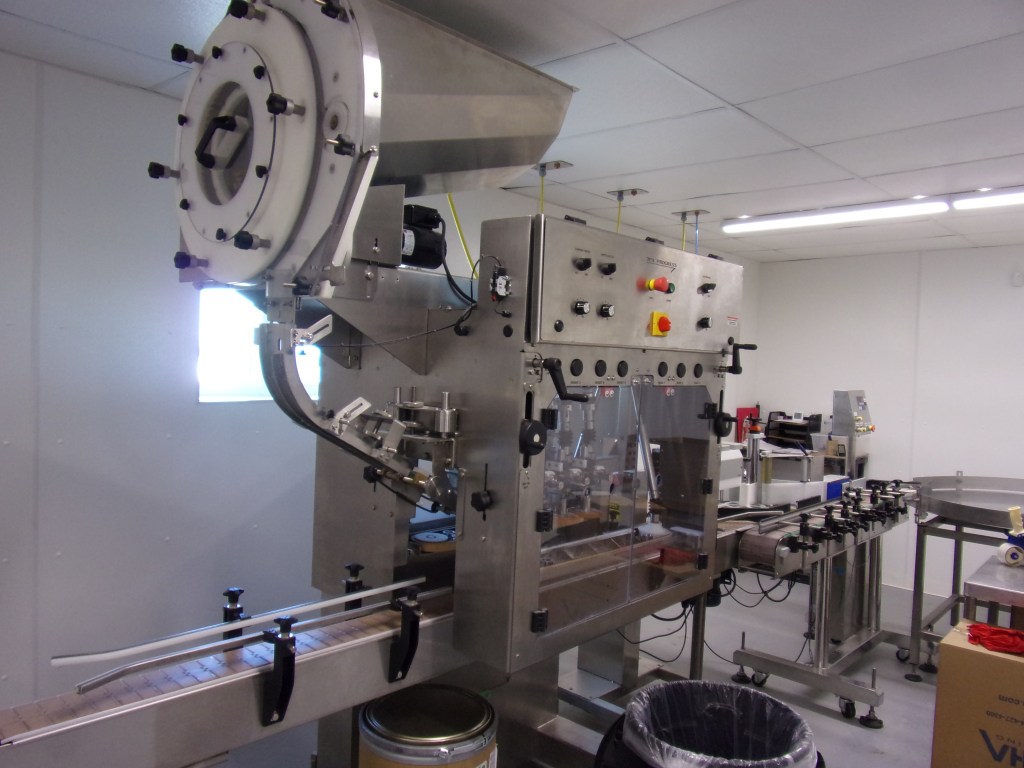
Machine for labelling products 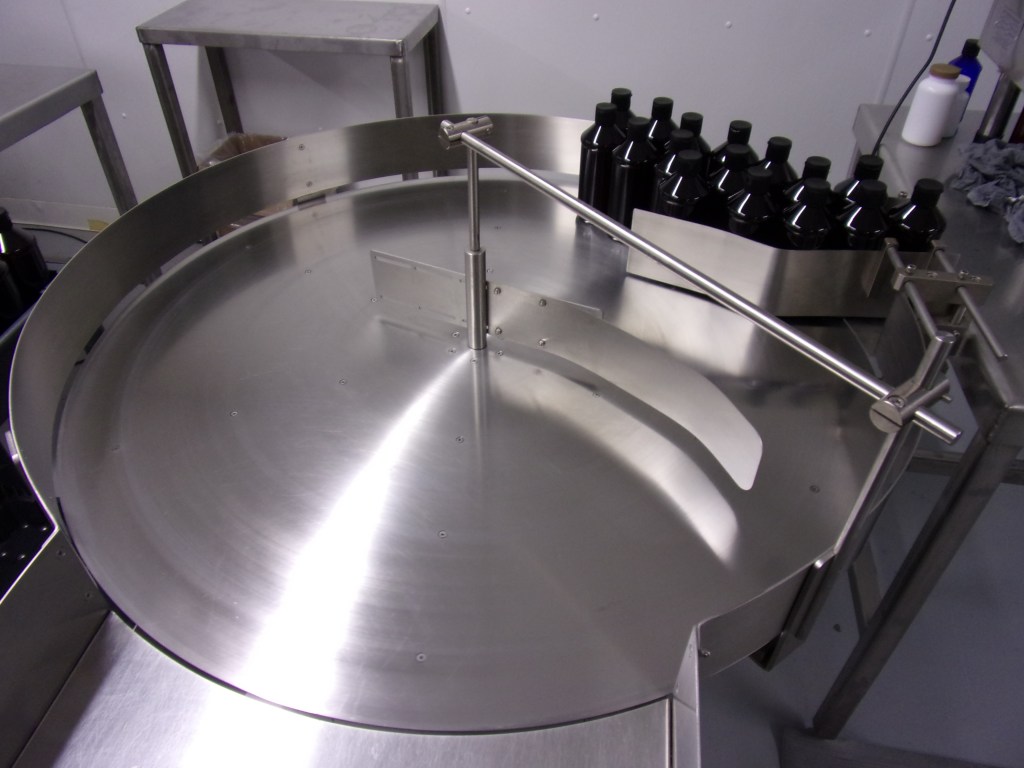
Seal oil products prepared in partnership with local Indigenous rightsholders 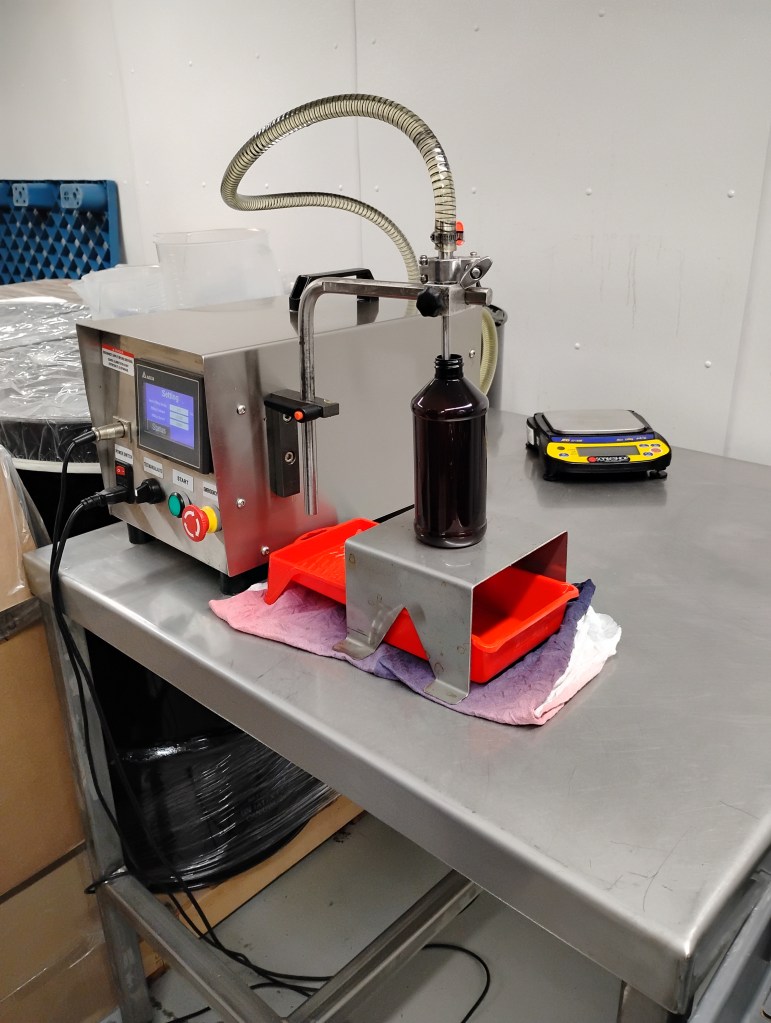
Bottling of seal oil 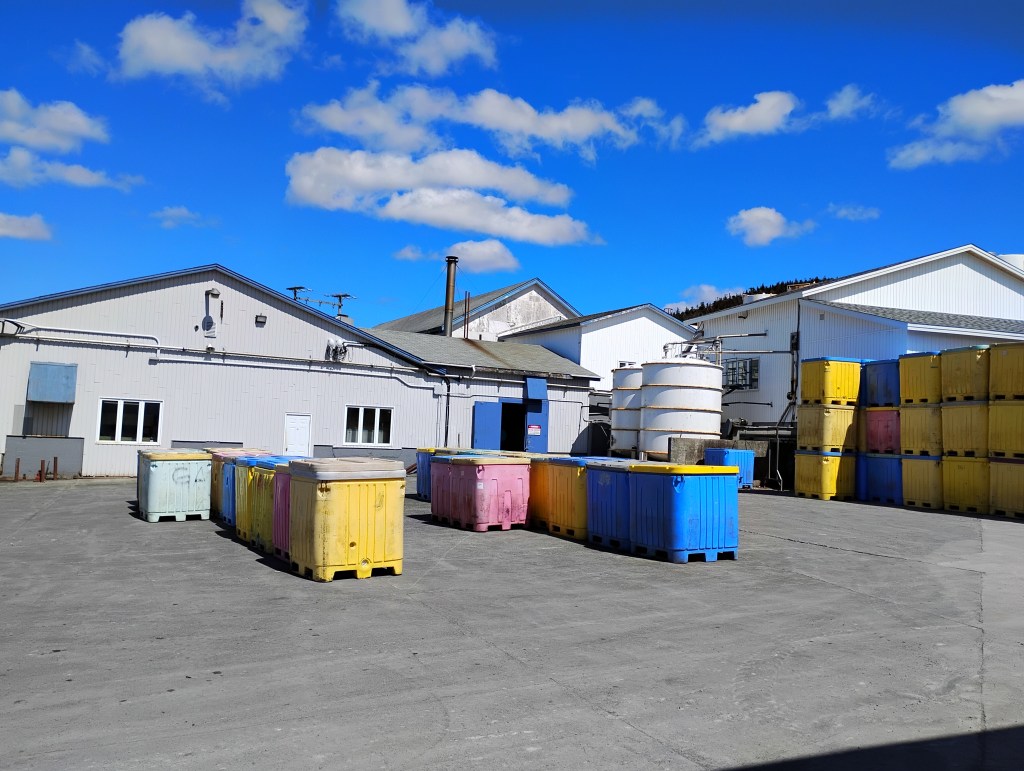
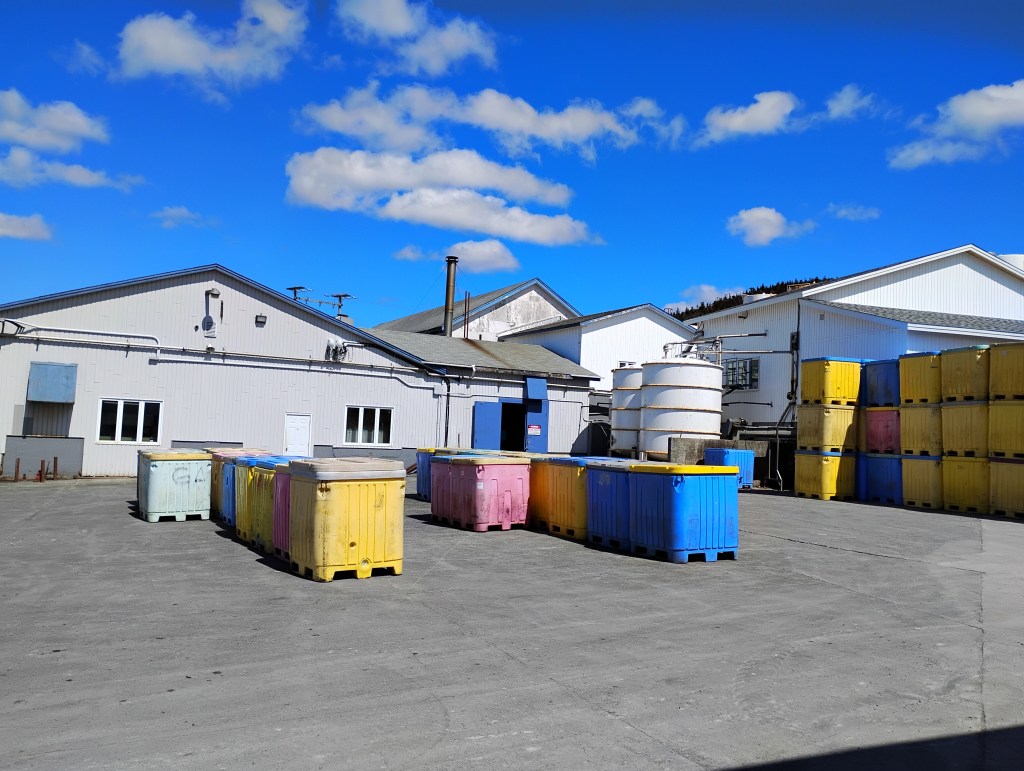
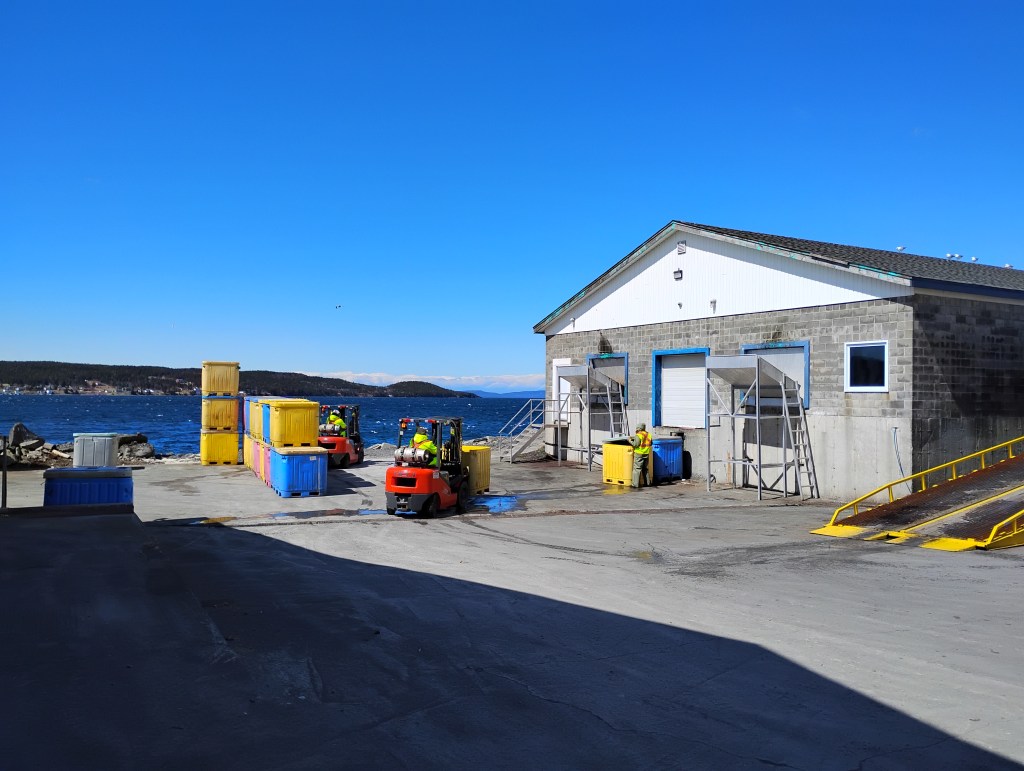
Offloading area for fresh, recently hunted seal material 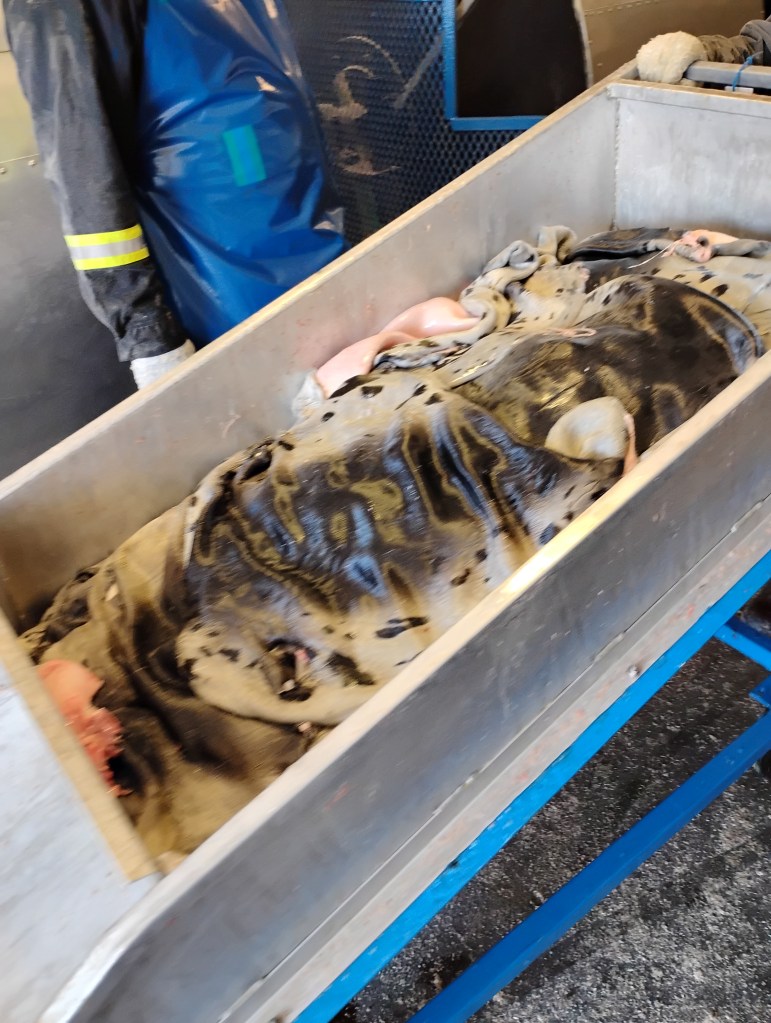
Seal pelts, recently separated from blubber, en-route to be degreased using traditional sawdust in concert with modern tumbler machinery 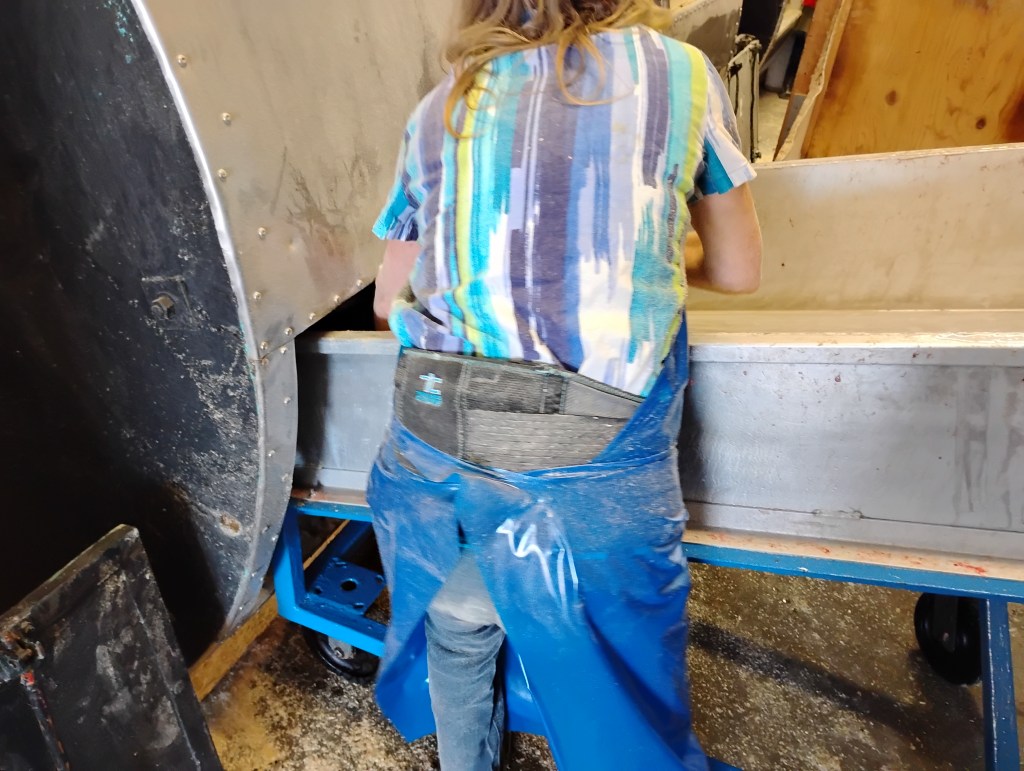
Pelts being loaded into tumbler 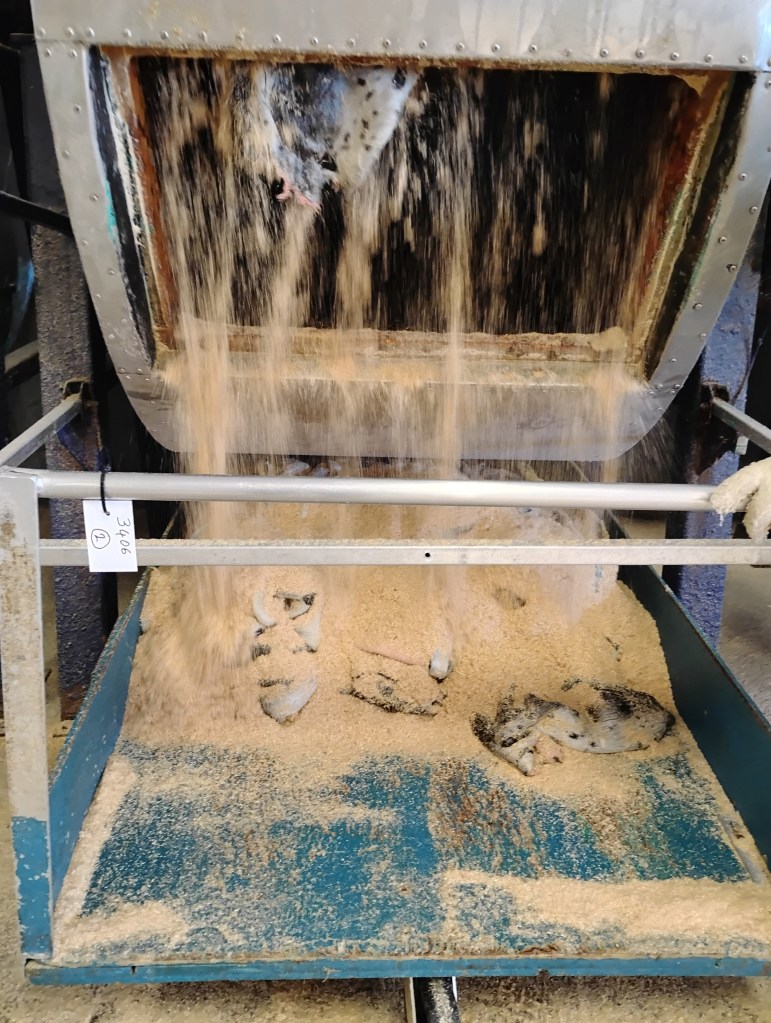
Seal pelts emerging degreased, covered in sawdust from modern tumbler machinery 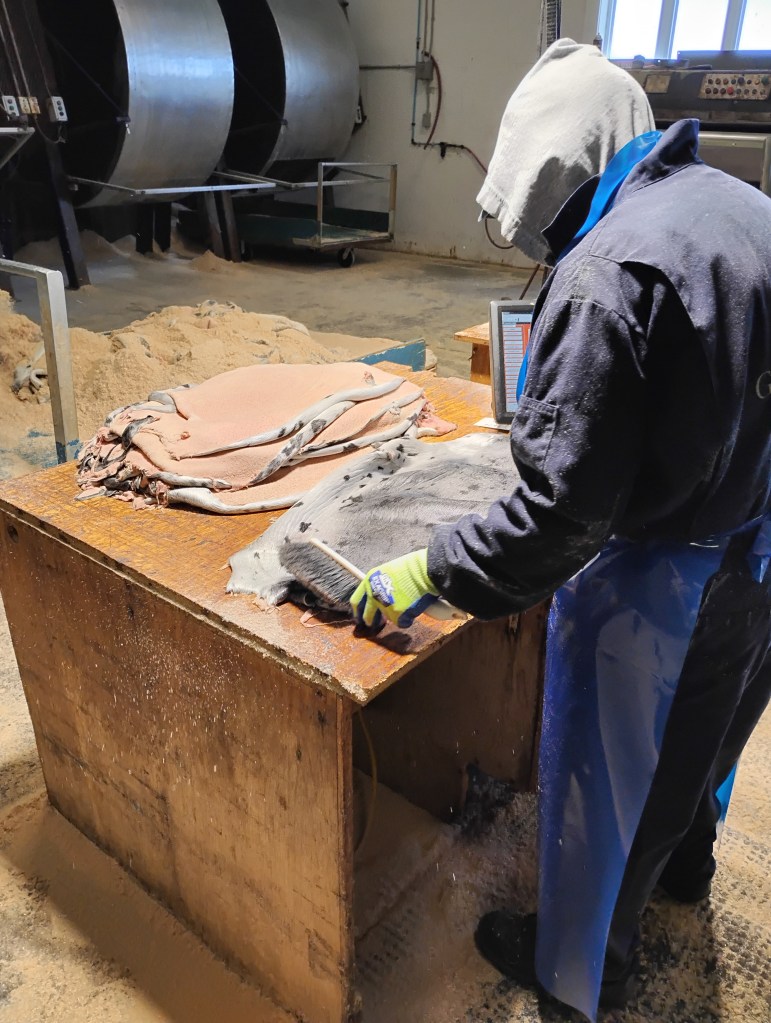
Pelt being manually inspected and graded by skilled local knowledge holder 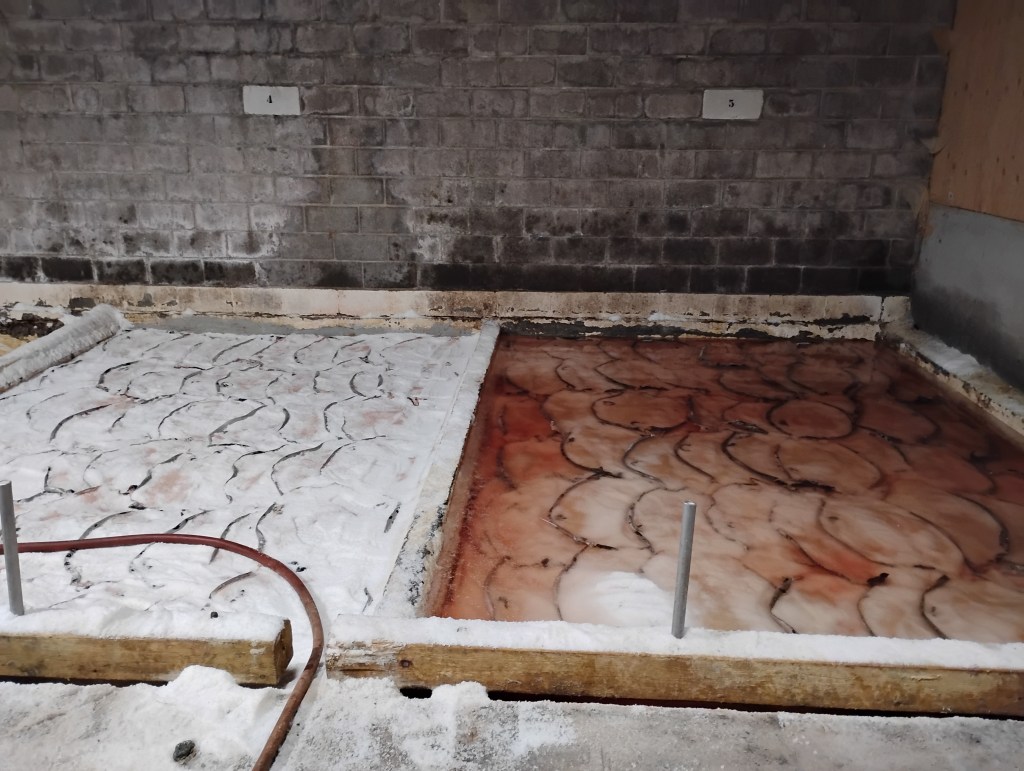
Pelts stored and cured after grading using tradition method of water, course salt and tight packing 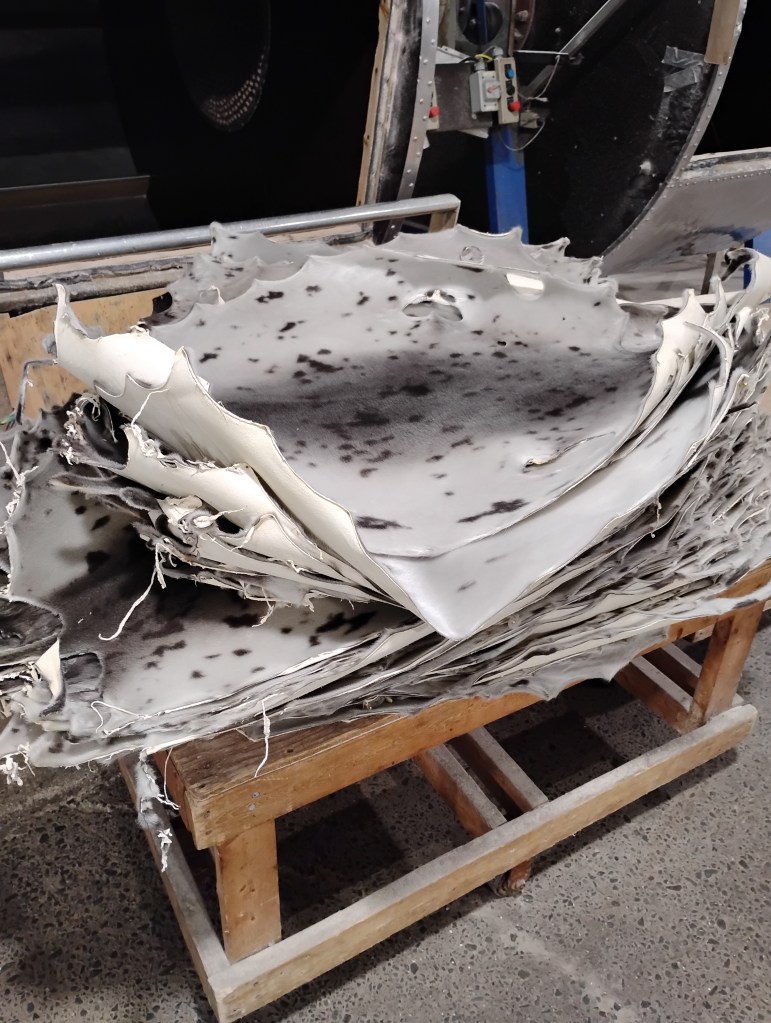
Dried, post curing, pelts waiting the completion of the tanning process 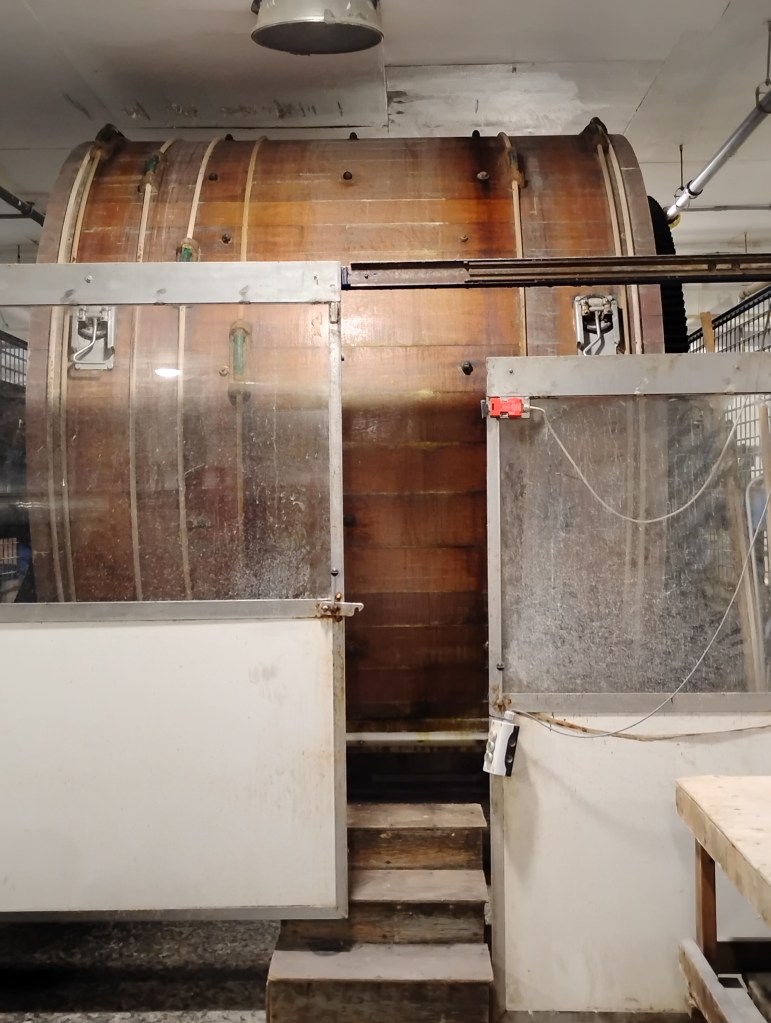
Machine used for washing pelts as part of the tanning process 
Machine used in preparation of pelts as part of the tanning process 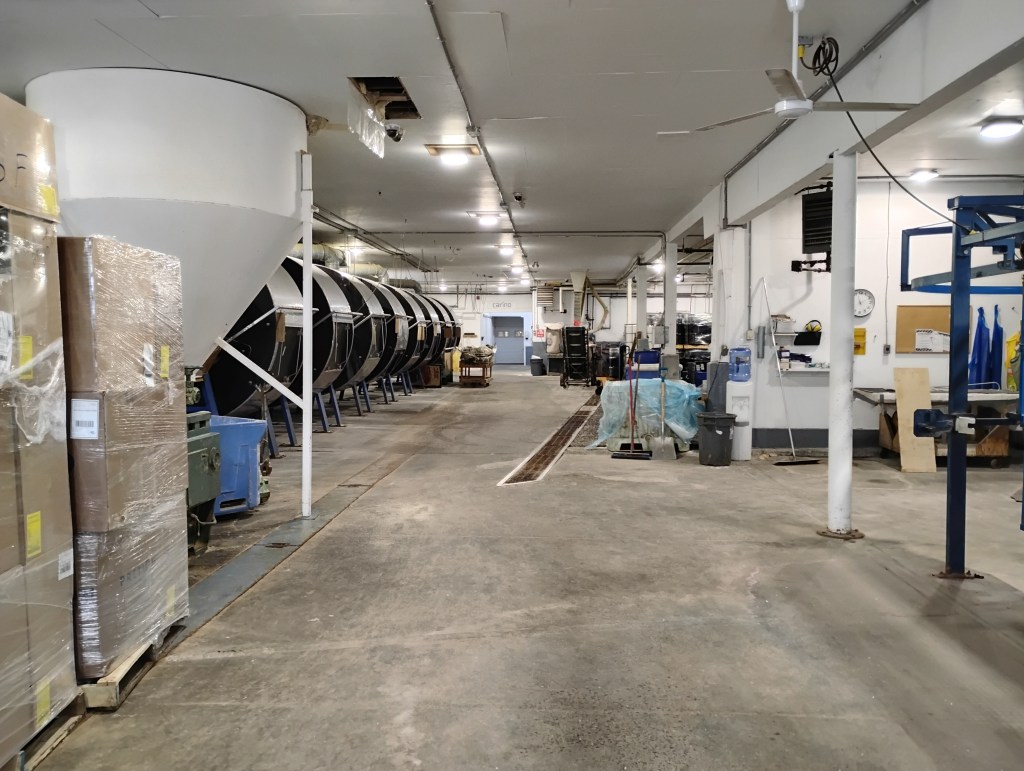
Pelt preparation facilities 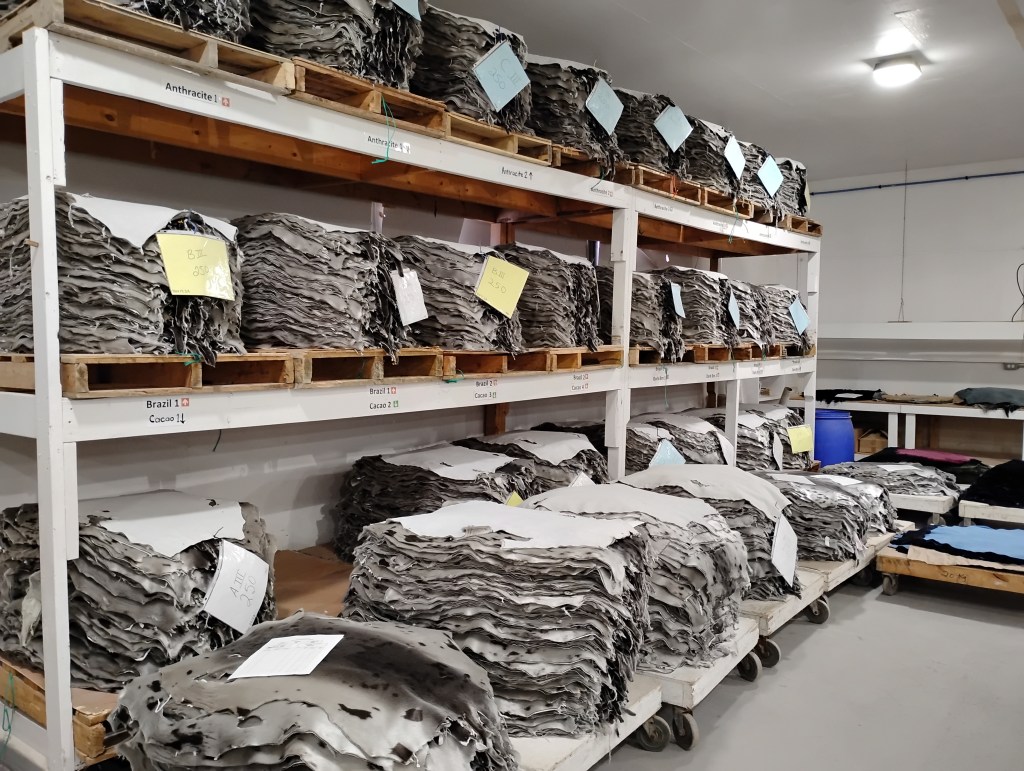
Ready for market pelts in various sizes, traditional and coloured options 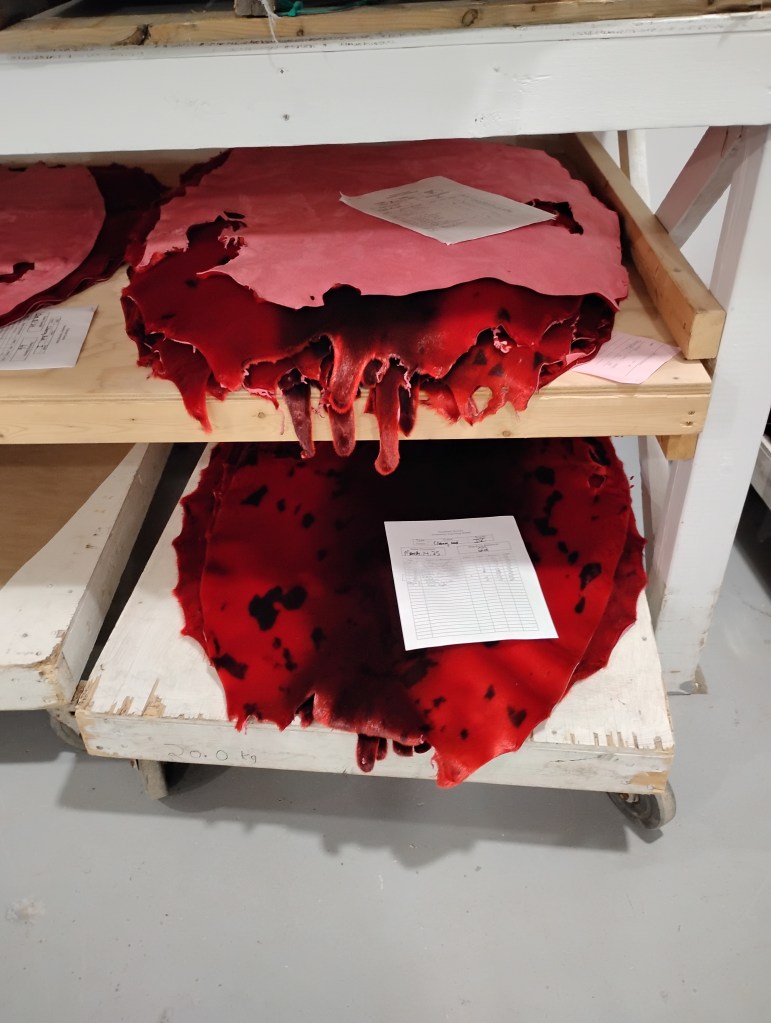
Ready for market dyed pelts 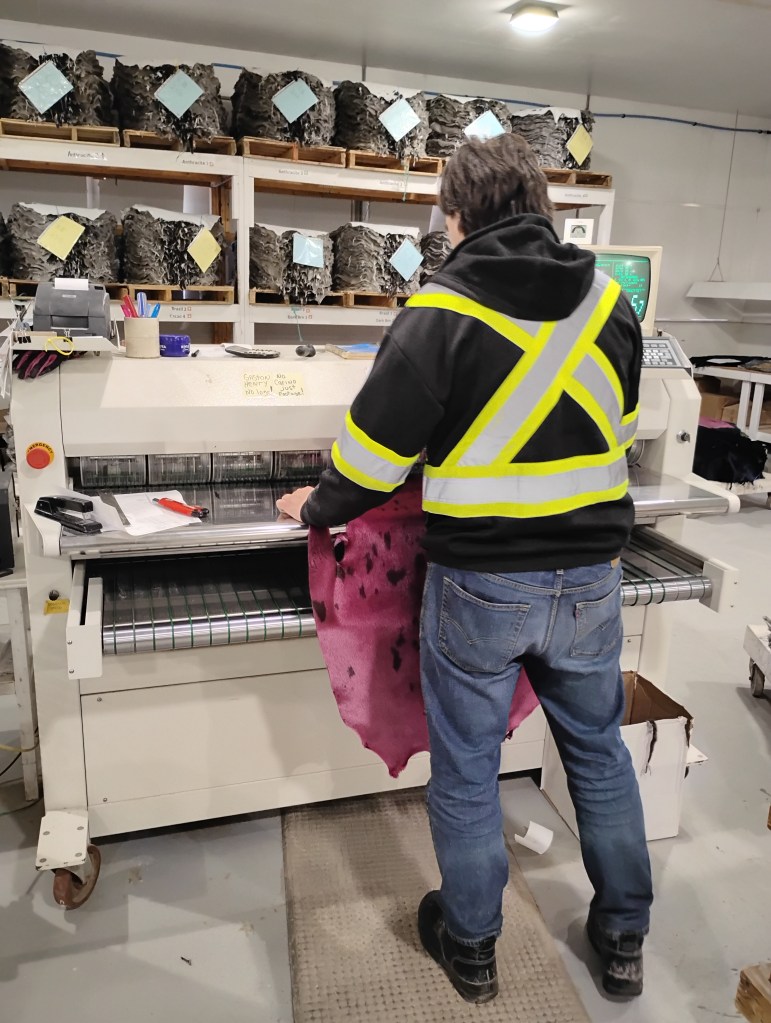
Top of the line machine for accurate pelt measurements to determine cost per individual pelt 
Processing area that prepared blubber into safe, consumable oil
Carino is it, the last actor standing stopping the extinction of generations of traditional knowledge on all aspects of seals and sealing for the peoples of Newfoundland and Labrador; the loss of Carino would sever the continuity of hundreds of years of local commercial processing and market innovation. The company also plays a large role in Atlantic Canadian sealing knowledge use, protection and promotion, too. The seals in Northeastern Canada are not endangered but local traditional sealing/fishing knowledge in Newfoundland and Labrador is, and the gravity and consequences of its lost would be profound.
But Carino, despite self-awareness of its place in the current status of northeastern and local sealing, draws on the past but does not dwell in it. My time there was a sharp reminder of what is at stake for my own culture but the atmosphere at Carino was one of hope, progress and an eye to what’s next. Onwards and upwards was a sense in the air at Carino as work progressed in the hands of local experts and their apprentices on that very blustery day in mid-April 2025. We will see what its future holds, but that there is a strong belief that there is a future for Carino and seal processing in Newfoundland and Labrador is very positive sign.
Written by: Danita Catherine Burke
 Seals, Stigma and Survival