
One of the most recognized names in the anti-sealing movement is Greenpeace. Greenpeace is an interesting actor. It capitalized on sealing to forge an international reputation for itself in environmental activism and used the issue and local peoples as a testing group for its campaigning techniques and strategies with many long term negative consequences for local actors. But it’s also an organisation that has – at least in part – started a journey of self-reflection on how it has adversely impacted some people through its anti-sealing activism.
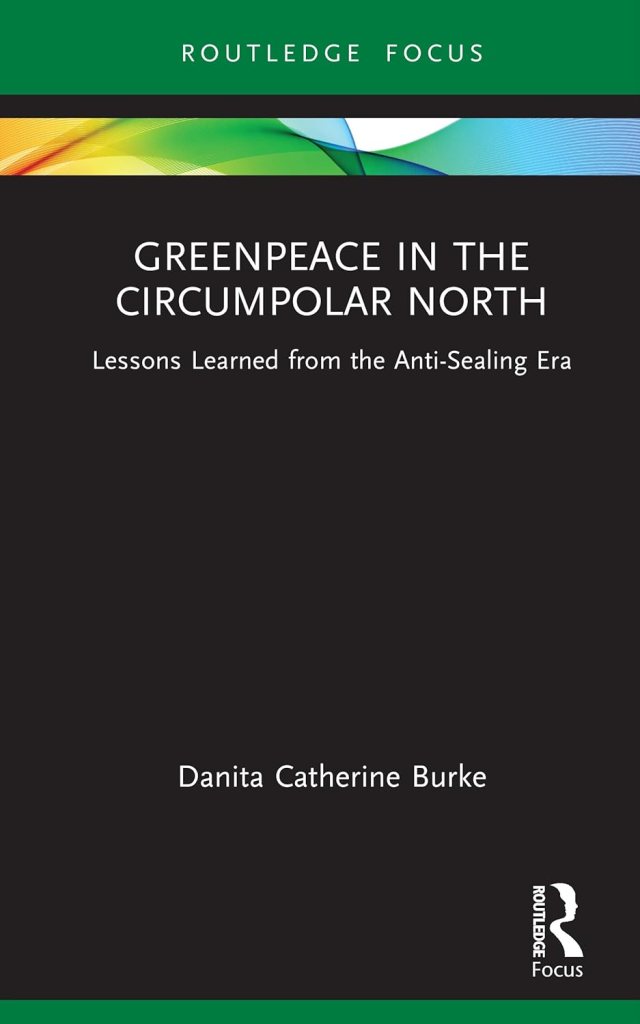
A new book is out now by “Seals, Stigma and Survival” principal investigator Dr. Danita Burke. The book is Greenpeace in the Circumpolar North: Lessons Learned from the Anti-Sealing Era, published by Routledge.
This book explores Greenpeace’s efforts to expand its engagement in the Circumpolar North in the 21st century and how this work is affected and informed by the organization’s controversial legacy of anti-sealing campaigning in the 1970s and 1980s.
Presenting the fallout for peoples and cultures targeted by Greenpeace’s anti-sealing campaigning as a pivotal dimension to the organization’s history, the book argues that this history must first be acknowledged in order to understand how Greenpeace has developed more positive working relationships in some instances with northern Indigenous peoples in recent years. The book looks to dispel the misconception that Greenpeace is universally rejected in the Circumpolar North, whilst also highlighting that its engagement and alliances are being built in the shadow of its yet-to-be fully tackled history as a leading part of the anti-sealing movement.
Greenpeace in the Circumpolar North is ideal for courses and research with a focus on Arctic studies, environmental activism, and Indigenous studies, and for those interested in learning more about the complex legacy of Greenpeace.
Greenpeace in the Circumpolar North features research by Dr. Burke’s and was completed during her work on “Seals, Stigma and Survival” and draws on her archival research at the Laurier Archives which was supported by the Joan Mitchell Travel Award.
 Seals, Stigma and Survival